Generative design that knows the business
Overview
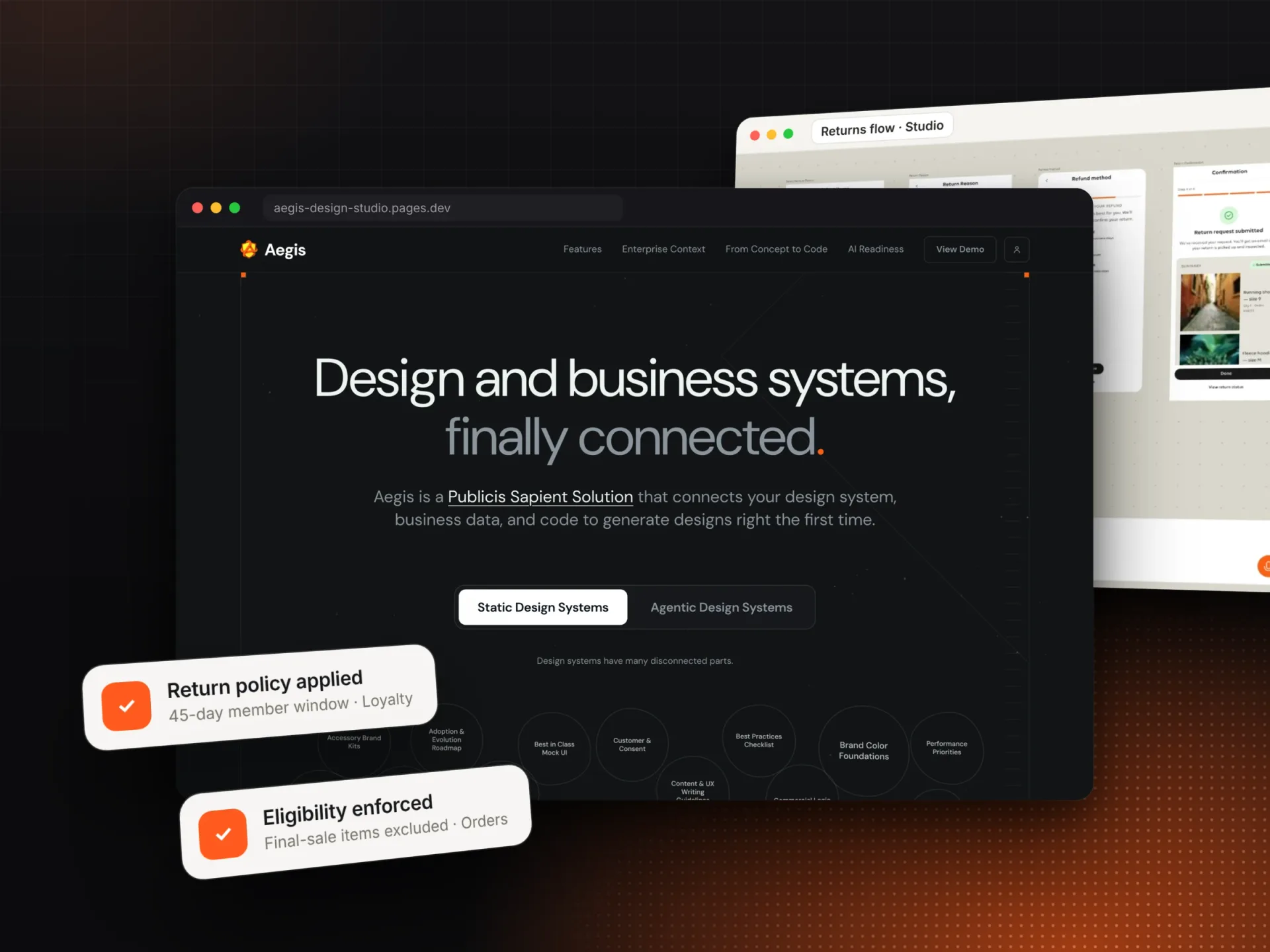
Aegis is an AI-powered design platform that generates interfaces from an organization's own design system and its business context: the policies, product data, customer rules and operating constraints that decide what an experience should actually do.
I was part of a four-person team at Publicis Sapient that took Aegis from idea to working product. I designed and built the overall app layout, UI and information architecture, designed the generative canvas, helped shape the enterprise context strategy, and contributed to the marketing site.
Challenge
Generative AI is getting very good at producing UI that looks right. Point a tool at a design system and it will use the right components and tokens. But most tools stop there. They don't know the business, so they fill the gaps with assumptions.
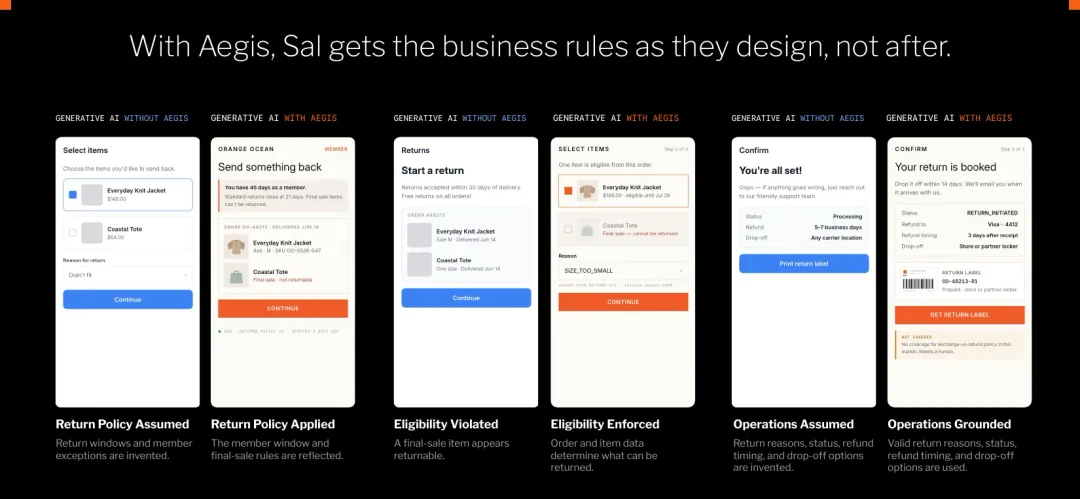
Ask one to design a returns flow and it will invent the return window, show a final-sale item as returnable, and make up refund timing and drop-off options. The design is polished and confidently wrong. Someone then has to chase the real rules across legal, operations and product teams, and the "fast" concept turns into slow, repeated rework after handoff.
The real problem wasn't generating screens. It was that the context needed to design correctly is scattered across the organization: in policy tools, product catalogs, order systems, analytics and people's heads.
The insight: correct, tailored, and true
We framed what an AI-ready design system needs as three layers:
- System: tokens, components and approved building blocks make a design correct.
- Guidance: spacing, surface hierarchy, component intent and brand voice make it tailored.
- Enterprise: policies, business logic, product information and customer data make it true.
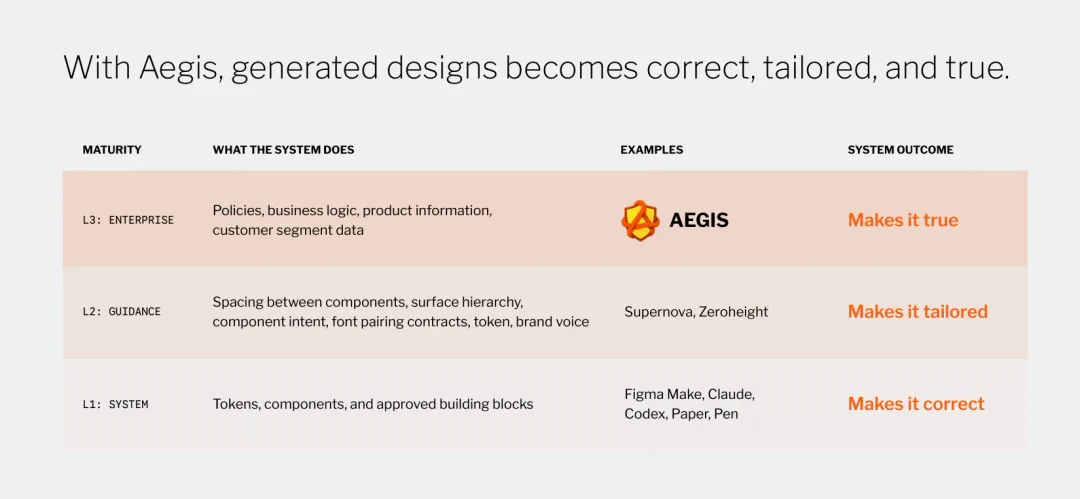
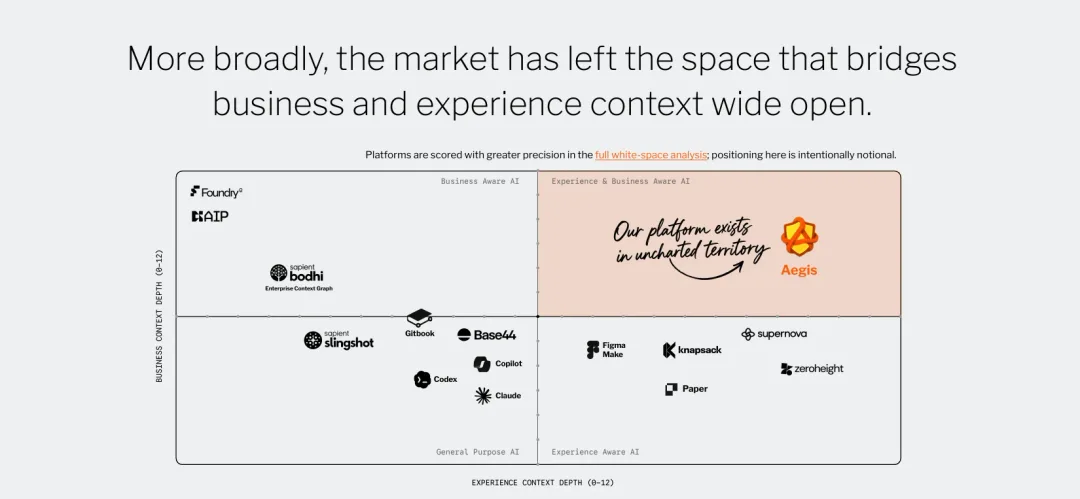
Most AI design tools live in the first layer, and documentation platforms cover the second. Mapping the market by experience context versus business context showed the space that bridges both was wide open. That became Aegis's reason to exist.
Enterprise context strategy
If business context was the differentiator, we needed to know which business context actually changes a design. I helped lead this work.
We built an inventory and taxonomy of the business systems that shape customer experiences, grouped into seven categories: governance and protection, product and content repositories, customer accounts and permissions, commerce and decisioning, operations and availability, strategy and investment, and performance and learning. For each, we defined representative platforms and the specific data Aegis should bring into the design process.
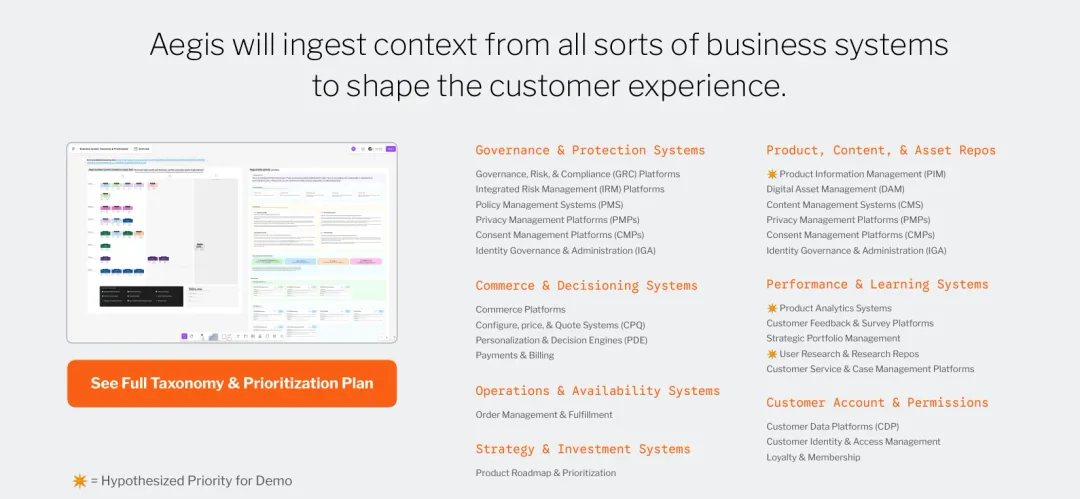
We then prioritized which systems to connect first by scoring each on its coverage across customer journeys, how much it changes the generated UI, its place in the product roadmap, and whether its data was ready to use. That gave us a lean first product: the strongest candidates first, then fast follows and later opportunities.
Showing the difference
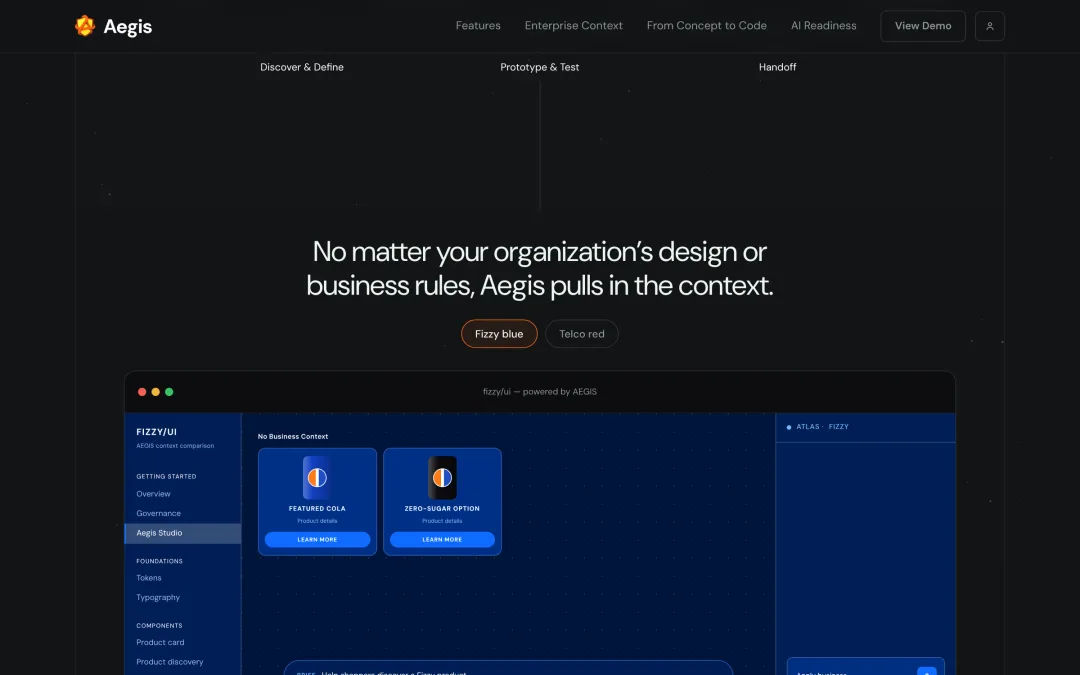
To make the value obvious, we compared the same returns flow generated with and without business context. Without it, the return policy, eligibility and operations are all assumed. With Aegis, each is grounded in real data.
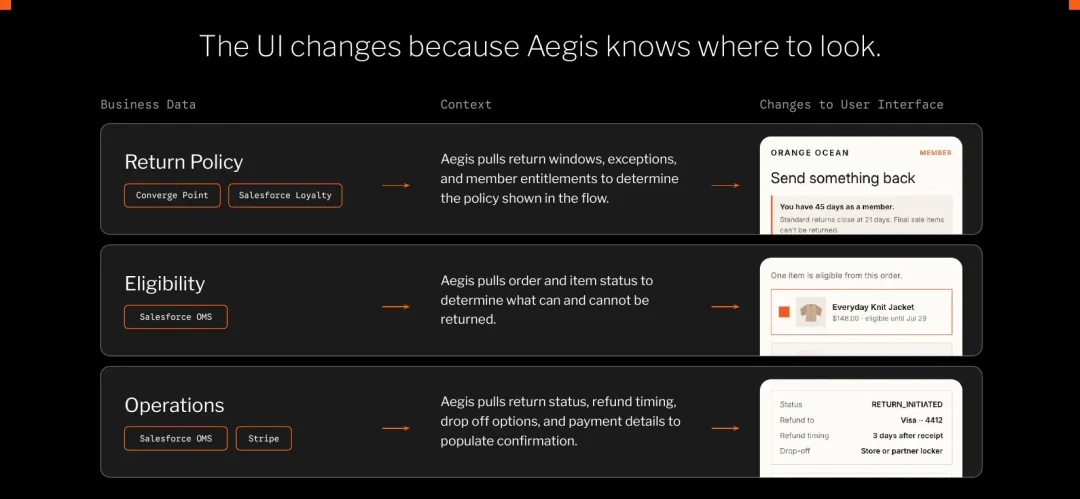
Every change is traceable to where it came from. Return windows and member exceptions come from the loyalty system, eligibility from order and item status, and refund timing and drop-off options from order management and payments.
Designing the product
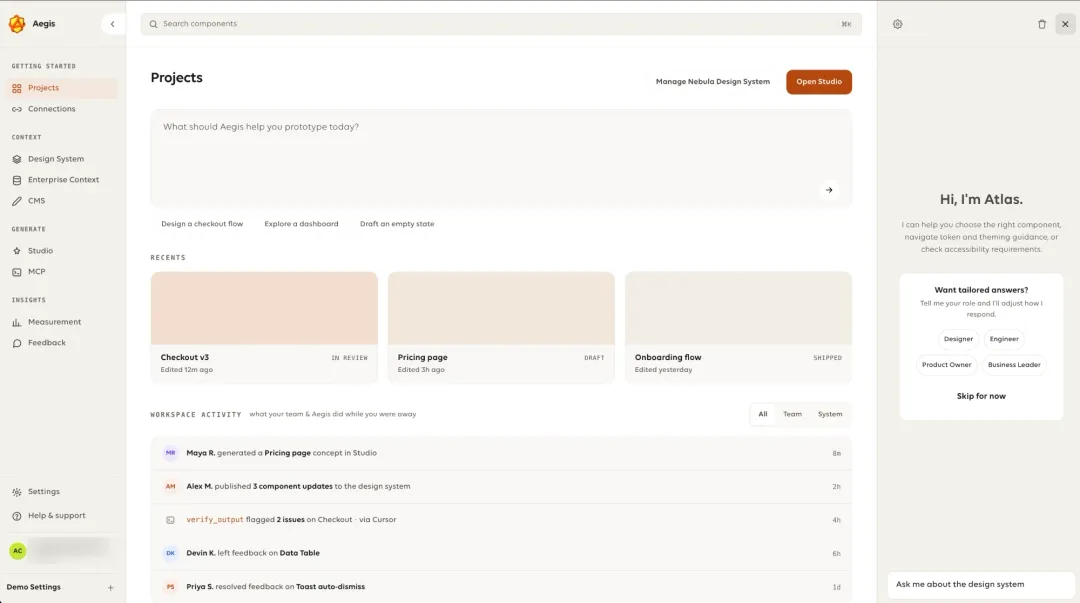
I designed and built the app's overall layout, UI and information architecture. The goal was one connected workspace where people can learn the system, manage context and generate governed designs without switching tools.
The navigation follows that mental model: Context (design system, enterprise context and the CMS), Generate (Studio and MCP) and Insights (measurement and feedback). Atlas, the assistant, stays docked alongside the work and tailors its answers to your role, whether you're a designer, engineer, product owner or business leader.
The generative canvas
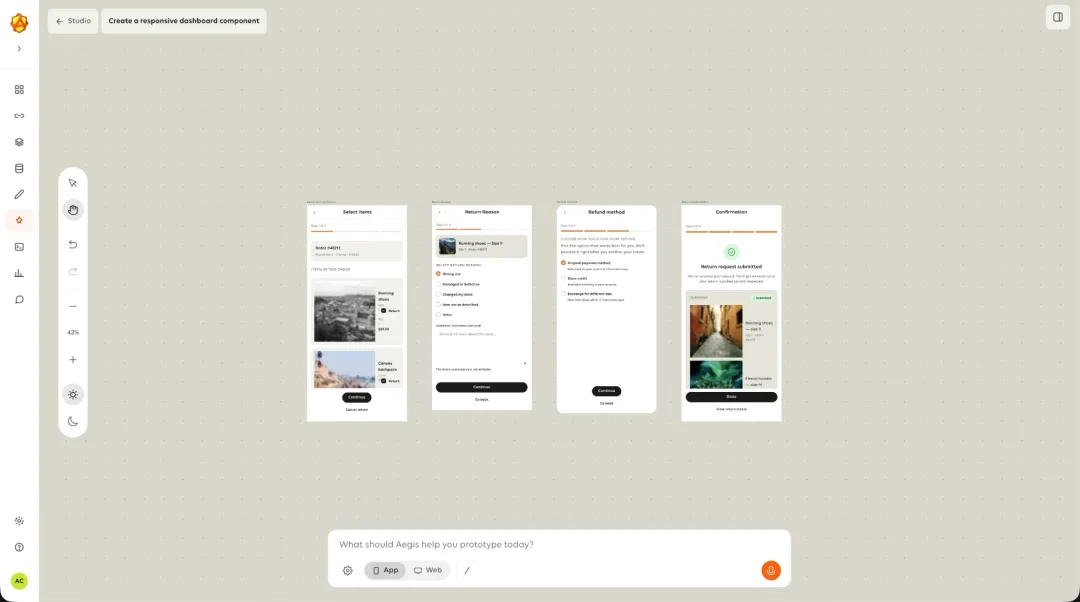
The canvas is where context turns into design. You describe what you need, choose app or web, and Aegis generates a full flow using the design system's own tokens and components, here a four-step returns flow.
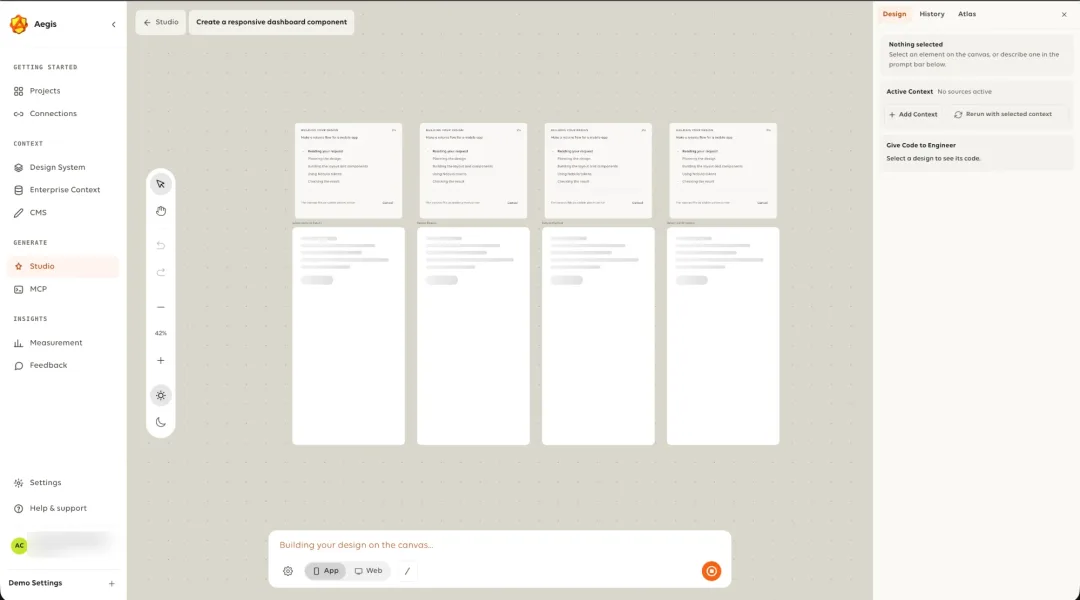
While it builds, Aegis shows its progress step by step: reading the request, planning the design, building layouts and components, applying design system tokens and checking the result. The side panel makes the business context explicit. You can see which sources are active, add context, rerun the design with the selected context, and hand the code to an engineer.
The product brings together four connected parts:
- Generative canvas: generates and edits context-aware designs, with targeted screen editing and decision traceability, so you can see why each choice was made.
- Atlas assistant: answers questions across design and business context and points to the rules and sources behind each answer.
- Content authoring: lets design system and business owners publish guidance that immediately informs the canvas and assistant.
- Export: moves generated concepts into Figma with token identity intact, and into code using the team's own frameworks, component APIs and tokens, or into other tools through MCP.
The key design principle throughout was trust. Generated work shows the context and rules it used, separating documented truth from assumption, and keeps people in the loop: Aegis accelerates the work, but humans still review.
Impact
Aegis grew out of Nebula, the AI-ready design system our team built for Publicis Groupe's enterprise AI platform. The work helped the program deliver its MVP ahead of schedule, a milestone that supported $100M in FY25 strategic investment. Aegis then gave leadership a new way to position our design systems expertise for enterprise AI delivery, helping generate $5M in new business development.
Today the foundation supports 60+ designers and engineers across three continents, with 40+ components, 100+ tokens and two custom themes. On top of it, the working product now includes canvas-to-Figma export with token identity, governed code export, automated contrast checks, and a pipeline that rebuilds the knowledge base whenever guidance, components or tokens change.
Aegis is now in active development and being shared with client partners to validate demand.